 |
| Hen. Vicente R. Lukban |
Wednesday, May 30, 2012
30 MAY


Tuesday, May 29, 2012
29 MAY
 | |
| Sen. Lorenzo Tanada y Martinez 1967 Free Press photo |
Raw photo credit: http://img862.imageshack.us/img862/7071/wik1d300.jpg
Monday, May 28, 2012
28 MAY

 1906 - The Philippine leper colony in Cebu province, Philippines, is established during the American colonial rule amidst the continuing struggle against the imperialist Bald Eagles by the still un-co-opted Filipino freedom-fighters to protect their land and independence; as the bloody and protracted Philippine-American War (1899-1914) rages on some seven years and three months after it first began, some 365 lepers land at the colony to form the nucleus of what is named the Culion Leper Colony, which would supposedly become known as the largest and one of the best institutions of its kind in the world.
 Photo credits:
http://philippine-revolution.110mb.com/alapan.htm
http://i344.photobucket.com/albums/p341/manilagalleontrade/culion.jpg?t=1251403264
Sunday, May 27, 2012
27 MAY
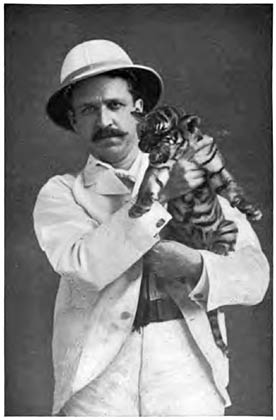 |
| Bald Eagle consul Rounseville Wildman |
Photo credit: http://www.gutenberg.org/files/27784/27784-h/images/wildman.jpg
Saturday, May 26, 2012
26 MAY

1609
- A law during the early period of the Spanish colonial rule in the
Philippines regulates the services of the Indians (natives/filipinos) by
prioritizing the hiring of Chinese and Japanese for
public works; however, the Augustinian Recollects will attempt to
thwart this order by later asking the king that they be released from
such restrictions on the use of natives for work only under certain conditions, claiming that such law will ruin their work in the archipelago; Spanish colonization of the Southeast Asian archipelago began in 1565 after establishing settlements in Cebu following a series of expeditions commissioned by the Spanish crown; the Philippine islands were first "discovered" [translation: first learned about] by Spain following the ill-fated 1521 expedition of Ferdinand Magellan who was killed by Mactan island chieftain Lapu-Lapu and his forces during the Battle of Mactan, and then followed up with several other expeditions, with the 1565 expedition by Miguel Lopez de Legaspi as signalling the beginning of the actual or successful Spanish colonization of the Philippines.
Photo credit: https://blogger.googleusercontent.com/img/b/R29vZ2xl/AVvXsEjGtGajySMbWogAXF4Ox8MMo4akWf9K1vxVjKfhcIazcmOQPvKGzPycLvGZYM6IKkq-8tVrK6rNb_1dfZnV4i9kQ94SbAH6zSAHxEiGF8b9aUogGe_AwtUkm7oQH0jEJ2zsPp-45L0x7-P9/s1600/chinese_chow-chow.jpg
Friday, May 25, 2012
25 MAY
 |
| Pablo Tecson y Ocampo |
Thursday, May 24, 2012
24 MAY
 1943 - The Director-General of the Japanese Military Administration of the Philippines during World War II congratulates the graduating class
of the Institute for Former [Filipino] USAFFE, or United States Army
Forces in the Far East; the Director-General urges the graduates of a cultural training and spiritual reorientation course to play active roles in reconstructing and regenerating their native country, the Philippines, and further asks them to strive for the benefit and welfare of their countrymen;
the Asian power invaded a host of Oriental lands during the War, driven in part by its Greater East Asia Co-Prosperity Sphere, an anti-Western master plan/vision of Japanese hegemonic leadership over a modernizing and united Asia that is rid of Western imperialism; Japan earlier invaded the Philippines, which has been a colony of the
imperialist Unites States for some four (4) decades, during their
so-called December 1941-May 1942 Philippine Campaign,
with the numerically superior defenders able to hold out for months
but still succumbing to the Japanese might during the Pacific
theatre of the Second World War.
1943 - The Director-General of the Japanese Military Administration of the Philippines during World War II congratulates the graduating class
of the Institute for Former [Filipino] USAFFE, or United States Army
Forces in the Far East; the Director-General urges the graduates of a cultural training and spiritual reorientation course to play active roles in reconstructing and regenerating their native country, the Philippines, and further asks them to strive for the benefit and welfare of their countrymen;
the Asian power invaded a host of Oriental lands during the War, driven in part by its Greater East Asia Co-Prosperity Sphere, an anti-Western master plan/vision of Japanese hegemonic leadership over a modernizing and united Asia that is rid of Western imperialism; Japan earlier invaded the Philippines, which has been a colony of the
imperialist Unites States for some four (4) decades, during their
so-called December 1941-May 1942 Philippine Campaign,
with the numerically superior defenders able to hold out for months
but still succumbing to the Japanese might during the Pacific
theatre of the Second World War.Raw photo credit: http://www.akiraifukube.org/japanese_army.jpg
Wednesday, May 23, 2012
23 MAY

Photo credit: http://asakiyume.livejournal.com/466854.html
Tuesday, May 22, 2012
22 MAY

Raw photo credit: http://julionakpil.blogspot.com/
Monday, May 21, 2012
21 MAY
 |
| Imperialist Gov. Taft addressing the "Philippine Assembly" |
Photo credit: http://reference.findtarget.com/search/Philippine%20Assembly/
Sunday, May 20, 2012
20 MAY
1899 - Filipino representatives Gen. Gregorio del Pilar, Lt.-Col. Alberto Barreto, Capt. Lorenzo Zialcita, and Gracio Gonzaga
arrive in Manila by special train from Malolos to negotiate peace terms
with the United States Philippine Commission [read: imperialist
commission], three months after the Bald Eagle President William
McKinley deliberately triggered the Philippine-American War (1899-1914);
with the two parties conferring at the Ayuntamiento in Intramuros
district, Manila, the imperialist Bald Eagle commission headed by Jacob
Schurman rejects the armistice sought
by the local freedom-fighters, insisting instead that the Filipino army
surrender unconditionally to American sovereignty; in two days'
time, the cabinet of President Emilio F. Aguinaldo will exhort the Filipinos to continue the fight to defend Philippine independence.
 |
| Representatives of the Philippine Government under siege: Capt. Zialcita, Lt. Col. Barreto, Gen. Del Pilar & Gonzaga negotiating with the imperialist invading Americans for some independence |
-- on the same day, Admiral George Dewey, the United States military official who earlier forged alliance against Spain, and deceptively promised, then-revolutionary leader Aguinaldo that the U.S. would supposedly honor Filipino independence, leaves the Philippines for the U.S. on board his flagship, the USS Olympia; over a period of several months, Dewey, along with consul generals to Singapore, E. Spencer Pratt, and to Hong Kong, Rounsenville Wildman, respectively took turns making Aguinaldo believe that the Bald Eagle only had good intentions; thus Aguinaldo stupidly allowed the free entry of the G.I.'s in the archipelago, eventually permitting the foreign 'allies' that-would-turn-invaders to position themselves for the Mock Battle of Manila that deceived the world into believing that it is the Americans and not the Filipinos who overcame the Spaniards.
 |
| Spanish Queen Isabella II |
1865 - A royal decree
from Spain's Queen Isabella II reorganizes secondary education in its
Southeast Asian colony, the Philippine Islands (Las Islas Filipinas), by
dividing schools into public and private, with the University of Santo Tomas being considered public and Colegio de San Juan de Letran being classified as College of the First Class; San Juan de Letran is grouped with the Ateneo Municipal, the College of Bacolor and other secondary schools under the category which is of two kinds,
including the kind that offers a complete course leading to the
bachelor of arts degree; the colonial-era decree gives gives the rector
of UST the responsibility of supervising and inspecting secondary
schools as it becomes the ex-oficio head of the secondary and higher education in the Philippines.
http://i2.squidoocdn.com/resize/squidoo_images/590/draft_lens2386777module14943982photo_1234145295IsabellaII.png; http://philippineamericanwar.webs.com/filipinosnegotiate.htm
Saturday, May 19, 2012
19 MAY

1898 - Some 10
months before imperialist United States forces formally invade the Philippines,
Gen. Emilio F. Aguinaldo, leader of the Philippine revolutionary forces
fighting to overthrow Spanish colonial rule, ends his exile following
American invitation for him to rally Filipinos against Spain; arriving at Cavite province aboard the revenue cutter USRC McCulloch,
Aguinaldo will soon confer with Admiral George Dewey to forge an
alliance against Spain, later saying that the Bald Eagle admiral has
categorically stated that the United States will recognize Philippine
Independence supposedly because "America is exceedingly well off as regards territory,
revenue, and resources and therefore needs no colonies;" earlier in
Hong Kong on April 22--three days before the U.S. declared war on
Spain--the American consul general to Singapore, E. Spencer Pratt,
conferred with Aguinaldo to discuss strategy against Spain, with Pratt promising Philippine independence under their protection; U.S. consul Rounsenville Wildman also told Aguinaldo that Dewey wanted the latter to return from exile and resume the fight for independence; earlier, a few months after eliminating Andres Bonifacio
y de Castro, the former head of the revolutionary forces, Aguinaldo
forged a truce with the Spaniards in the December 1897 Pact of
Biak-na-Bato.
Raw photo credit: http://www.uscg.mil/history/img/USRC_2.jpg
Friday, May 18, 2012
18 MAY
 1571 - Philippine tribal chief Rahaj Sulayman belatedly appears before Spanish conquistadore Miguel Lopez de Legazpi to make peace folllowing the Second Conquest of Manila; following a short period of peace and after prodding by other tribes outside Manila, Rajah Sulayman (if not another ["Torik"] Sulayman) would later lead thousands of warriors from Manila, Bulacan, and Pampanga in the fierce but failed battle against the formidably armed colonizing Castillians, the Battle of Bangkusay; nearly exactly a year earlier in May 1570, the tribal chief waged a battle against the Spaniards-- even as other kingdoms in the Southeast Asian archipelago accepted the foreigners--when Sulayman learned that "friendship" with the pale-skinned foreigners meant vassalage; while this initial (Filipino) battle for freedom was unsuccessful, they nonetheless gave a hard time to the more equipped forces of the Spanish invaders, thanks to the superior-quality cannons Sulayman had commissioned from Panday Pira, a blacksmith from the archipelago's southern islands.
Raw photo credit: http://www.myfourthirds.com/files/1097/1P3023658.jpg
Thursday, May 17, 2012
17 MAY

Photo credit: http://fil.wikipilipinas.org/index.php?title=Imahen:Gerry.jpg
Wednesday, May 16, 2012
16 MAY

Subscribe to:
Posts (Atom)